
Deep Definition – What are Tungsten Steel and Cemented Carbide?
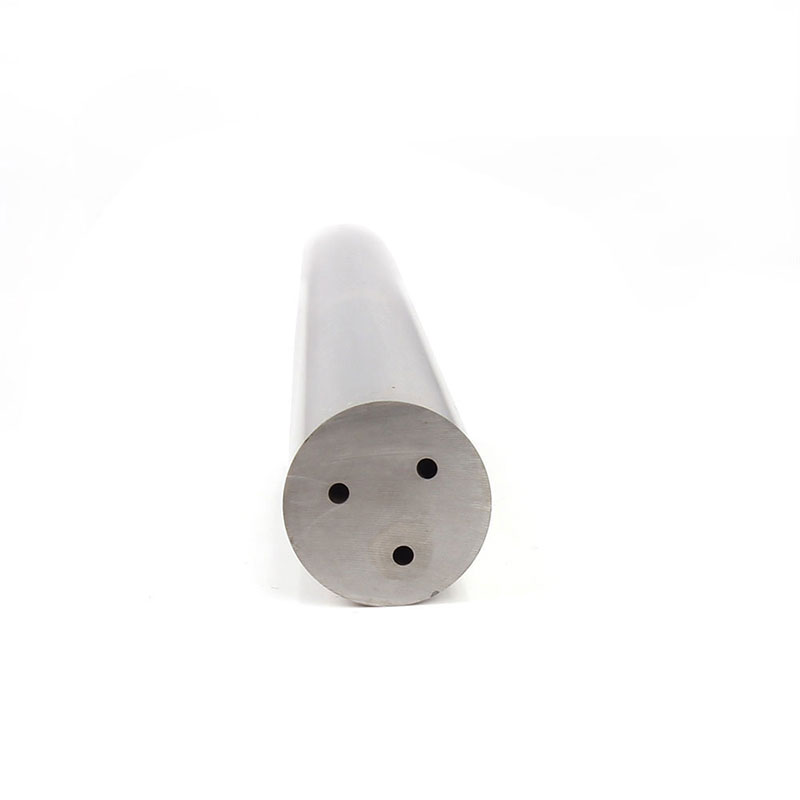
1.1 What is Cemented Carbide?
Cemented Carbide is a composite material produced through powder metallurgy. It primarily consists of:
Hard Phase (Tungsten Carbide, WC): Provides extreme hardness and wear resistance.
Binder Phase (Cobalt, Co): Acts as the "glue" that holds the WC particles together, providing toughness and preventing the material from shattering under impact.
1.2 What is Tungsten Steel?
Colloquially, "Tungsten Steel" refers to Cemented Carbide. In strict metallurgical terms, however, Tungsten Steel may refer to alloy steels with high tungsten content (such as High-Speed Steel/HSS).
The Key Difference: Cemented carbide is significantly harder than HSS. While HSS typically reaches HRC 62-70, Cemented Carbide operates in the HRA 89-94 range.
Industry Context: In the global rod trade, "Tungsten Steel Rods" almost always refers to "Tungsten Carbide Rods."
Chapter 2: The Production Process – From Powder to Precision
The manufacturing of Tungsten Carbide Rods is a process of meticulous control. Any deviation can result in internal defects, porosity, or compromised structural integrity.
2.1 Powder Preparation and Wet Milling
Based on the specific grade requirements, Tungsten Carbide powder is mixed with Cobalt powder and specialized additives. This mixture undergoes wet milling in a ball mill to achieve sub-micron or even nano-scale particle sizes, ensuring a perfectly homogeneous blend.
2.2 Spray Drying
The slurry from the milling process is processed in a closed-cycle spray dryer. This creates granulated powder with excellent flowability, which is critical for achieving consistent density during the shaping phase.
2.3 Shaping Processes
There are two primary methods for forming carbide rods:
Extrusion: Ideal for producing long rods. The powder is mixed with a plasticizer and forced through a die. This method is versatile and allows for the creation of internal coolant holes.
Die Pressing: Used for shorter rods. It offers excellent consistency but is limited by length.
2.4 Sintering – The Core Transformation
Sintering occurs in a vacuum or a HIP (Hot Isostatic Pressing) Sintering Furnace at temperatures between 1400°C and 1500°C.
Low-Pressure HIP Sintering: This is the industry gold standard. By applying pressure during the final stage of sintering, internal micro-porosity is virtually eliminated. This increases the material's density and boosts Transverse Rupture Strength (TRS) by more than 10-15%.
2.5 Finishing and Deep Processing
Rods directly from the furnace are known as "Sintered Blank Rods." Depending on customer needs, they undergo:
Centerless Grinding: To achieve precision tolerances (e.g., h6).
Cutting and Chamfering: To meet specific length requirements.
Chapter 3: Key Technical Parameters and Material Grades
When selecting a carbide rod, one must look beyond simple hardness. A balance of several factors is required:
3.1 Hardness (HRA)
The higher the hardness, the better the wear resistance. Standard rods typically range from 90-92 HRA, while ultra-fine grain rods can exceed 94 HRA.
3.2 Transverse Rupture Strength (TRS)
TRS measures the material's resistance to breaking. High-performance rods usually feature a TRS between 3500 and 4500 N/mm². Insufficient TRS leads to premature tool chipping during high-speed machining.
3.3 Grain Size
Coarse Grain: High toughness, used for heavy impact applications.
Fine/Ultra-Fine Grain: Provides a superior combination of hardness and strength. This is the mainstream choice for manufacturing high-end solid carbide end mills.
3.4 Cobalt Content (Co %)
Cobalt content generally ranges from 6% to 12%.
6% Cobalt: High hardness, ideal for machining cast iron and non-ferrous metals.
10%-12% Cobalt: Enhanced toughness, ideal for stainless steel, high-temperature alloys, and heavy-duty cutting.
Chapter 4: Classifications and Specifications
4.1 Physical Configurations
1.Solid Carbide Rods: The most common type, used for standard end mills and drills.
2.Straight Coolant Hole Rods (Single/Double): These feature internal channels that allow high-pressure coolant to reach the cutting edge, significantly improving heat dissipation.
3.Spiral Coolant Hole Rods: Featuring helical channels, these are specifically designed for high-performance twist drills.
4.2 Standard Dimensions
1.Diameter Range: Typically from Ø0.5mm to Ø40mm. Common sizes include Ø3, Ø6, Ø8, Ø10, Ø12, Ø16, and Ø20.
2.Length: Standard lengths are 310mm or 330mm, though custom lengths up to 1000mm are available.
3.Tolerance Classes:
4.Unground (Blank): Larger tolerances, typically +0.3/+0.8mm.
5.Ground: Usually finished to h6 (the precision standard), h7, or h5.
Chapter 5: Wide-Ranging Applications
As the "King of Tool Materials," Tungsten Carbide Rods are indispensable in:
5.1 Metal Cutting Tools
This is the primary application. Through CNC tool grinding, rods are transformed into:
End Mills: Used for milling mold steel, aluminum alloys, and stainless steel.
Drills: For high-precision hole making.
Reamers: For achieving final dimensional accuracy in holes.
5.2 PCB (Printed Circuit Board) Processing
PCB micro-drills are made from ultra-fine grain carbide rods. These tools are often thinner than a human hair (below 0.1mm) and require extreme rigidity.
5.3 Medical Devices
Used for surgical instruments and dental burs. The high hardness ensures that the cutting edges remain razor-sharp and corrosion-resistant.
5.4 Aerospace and Automotive Industries
Machining Carbon Fiber Reinforced Plastics (CFRP), Titanium alloys, and Inconel requires the superior heat resistance of high-performance carbide rods.
Chapter 6: How to Select the Right Carbide Rod
To ensure optimal performance, consider the following:
Workpiece Material:
1. Aluminum/Plastic: Choose K-grade with high hardness and low cobalt.
2. Stainless Steel/Titanium: Choose M or P-grade with high toughness and thermal shock resistance.
3. Hardened Steel (HRC 50+): Ultra-fine grain rods are mandatory.
4. Porosity Levels: High-quality rods should show virtually no porosity under a metallographic microscope (Grade A02/B00/C00).
5. Concentricity: For coolant hole rods, the eccentricity of the hole is vital for the dynamic balance of the tool at high RPMs.
6. Surface Integrity: Ground rods must be free of scratches, pits, or micro-cracks.
Chapter 7: Why Partner With Us?
l 100% Virgin Raw Materials: We never use recycled scrap, ensuring consistent performance in every batch.
l Advanced HIP Technology: Our state-of-the-art German/Swiss sintering furnaces ensure a fully dense internal structure.
l Rigorous Quality Control: Every rod undergoes metallographic analysis, hardness testing, TRS testing, and ultrasonic flaw detection.
l Customization Capabilities: We provide non-standard diameters, custom lengths, and specialized coolant hole configurations.
Conclusion: Elevating Your Machining Precision
While a Tungsten Carbide Rod may seem like a simple component, it is the foundation of machining quality. In an era of high-speed efficiency and extreme precision, choosing a premium carbide rod is an investment in your productivity.
If you are looking for high-performance carbide rods or need expert material selection advice, contact our technical team today.
Carbide Rods Products
All Categories
- Ground Solid Tungsten Carbide Rods
- Unground Solid Tungsten Carbide Rods
- Tungsten Carbide Rods Single Hole
- Tungsten Carbide Rods Double Holes
- Nonstandard Tungsten Carbide Rods
- Tungsten Carbide Bars And Strips
- Tungsten Carbide Plates
- Customized Tungsten Carbide Products
- Tungsten Carbide Burr Blank
- Tungsten Weight
- Tungsten carbide rods&Custom-made Carbide rods
- Cemented Carbide Plates & Non-Standard Custom-made Carbide Plates
- Cemented Carbide Strips & Non-Standard Custom-made Carbide Strips
- Cemented Carbide Die & Non-Standard Custom-made Carbide Die
Contact Us
HAO Carbide Co., LTD.
Catherine Tang
Tel: +86-731-22199705
Fax: +86-731-28260602
Mob: +86-13975383023
Email: Catherine@haocarbide.com
Web: www.hao-carbide.com
Address: Building 3, Power Valley Industrial Park, Zhuzhou City, Hunan Province, China