
What is Tungsten Heavy Alloy?
1. What is Tungsten Heavy Alloy?
Tungsten Heavy Alloy (WHA), also known as tungsten-based alloy, is characterized by its exceptional density, which can reach over 19.10 g/cm³. The most well-known and commonly used varieties are high-specific gravity or high-density tungsten alloys, such as W-Ni-Fe (Tungsten-Nickel-Iron) and W-Ni-Cu (Tungsten-Nickel-Copper). Consequently, "Tungsten Alloy" and "High-Density Alloy" are often used interchangeably in the industry.
WHA is a composite material where tungsten serves as the hard phase, embedded in a binder phase consisting of elements like Nickel (Ni), Iron (Fe), Copper (Cu), Cobalt (Co), and Molybdenum (Mo). Therefore, WHA encompasses not only high-specific gravity alloys but also two-phase alloys like Tungsten-Copper (W-Cu), Tungsten-Silver (W-Ag), and Tungsten-Gold (W-Au), as well as multi-element alloys containing Molybdenum, Nickel, Manganese, and Chromium—increasingly known as High Entropy Alloys (HEA).
WHA boasts a suite of superior properties: high specific gravity, high strength, excellent radiation absorption, high thermal conductivity, low coefficient of thermal expansion, and good electrical conductivity. Combined with excellent weldability and machinability, it is widely utilized in electronics, automotive, defense, military, aerospace, maritime, optoelectronics, and medical industries.
For more information, please visit:
2. Properties and Standards of High-Density Tungsten Alloy
Tungsten alloys are non-toxic, non-radioactive, and feature a high melting point (3422°C), high density (16.518.75 g/cm³), high hardness, and immense strength. They offer low vapor pressure, superior radiation shielding, wear resistance, high-temperature stability, impact resistance, and corrosion resistance, along with good ductility and machinability.
Physical properties and production processes vary depending on the raw material ratios and the type/quantity of binders used. Currently, most production follows internal corporate standards or application-specific requirements (such as military specifications). Internationally, U.S. Military Standards (MIL-SPEC) are widely adopted.
|
Class |
Composition |
Density |
Hardness |
Tensile Strength |
Yield Strength |
Elongation |
Magnetism |
|
Class 1 |
90W6Ni4Cu |
17.0 |
24 |
110,000 |
80,000 |
6% |
N/A |
|
Class 1 |
90W7Ni3Fe |
17.0 |
25 |
120,000 |
88,000 |
10% |
Weakly Magnetic |
|
Class 2 |
92.5W5.25Ni2.25Fe |
17.5 |
26 |
114,000 |
84,000 |
7% |
Weakly Magnetic |
|
Class 3 |
95W3.5Ni1.5Cu |
18.0 |
27 |
110,000 |
85,000 |
7% |
N/A |
|
Class 3 |
95W3.5Ni1.5Fe |
18.0 |
27 |
120,000 |
90,000 |
7% |
Weakly Magnetic |
|
Class 4 |
97W2.1Ni0.9Fe |
18.5 |
28 |
123,000 |
85,000 |
5% |
Weakly Magnetic |
|
Grade |
Composition |
Density |
Heat Treatment |
Tensile Strength |
Elongation |
Hardness |
|
Class 1 |
90W7Ni3Fe |
17.1 ± 0.15 |
Sintering |
900 - 1000 MPa |
18 - 29% |
24 - 28 HRC |
|
Class 1 |
91W6Ni3Fe |
17.25 ± 0.15 |
Sintering |
900 - 1000 MPa |
17 - 27% |
25 - 29 HRC |
|
Class 2 |
92W5Ni3Fe |
17.50 ± 0.15 |
Sintering |
900 - 1100 MPa |
16 - 26% |
25 - 29 HRC |
|
Class 2 |
93W4Ni3Fe |
17.60 ± 0.15 |
Sintering |
900 - 1100 MPa |
16 - 24% |
26 - 30 HRC |
|
Class 3 |
95W3Ni2Fe |
18.10 ± 0.15 |
Sintering |
920 - 1100 MPa |
10 - 22% |
27 - 32 HRC |
|
Class 4 |
96W3Ni1Fe |
18.30 ± 0.15 |
Sintering |
920 - 1100 MPa |
8 - 22% |
28 - 34 HRC |
|
Class 4 |
97W2Ni1Fe |
18.50 ± 0.15 |
Sintering |
920 - 1100 MPa |
6 - 13% |
28 - 36 HRC |
|
Class |
Composition |
Density |
Hardness |
Min Tensile Strength |
Elongation |
Magnetism |
|
Class 1 |
90W6Ni4Cu |
17.1 |
24 |
550 - 750 MPa |
8 - 15% |
N/A |
|
Class 1 |
90W7Ni3Fe |
17.1 |
25 |
650 - 850 MPa |
20 - 25% |
Weakly Magnetic |
|
Class 2 |
92.5W5.25Ni2.25Fe |
17.5 |
26 |
650 - 850 MPa |
18 - 24% |
Weakly Magnetic |
|
-- |
93W4Ni3Cu |
17.6 |
26 |
550 - 700 MPa |
5 - 10% |
N/A |
|
-- |
93W5Ni2Fe |
17.6 |
26 |
650 - 850 MPa |
15 - 20% |
Weakly Magnetic |
|
Class 3 |
95W3.5Ni1.5Cu |
18.0 |
27 |
500 - 700 MPa |
3 - 5% |
N/A |
|
Class 3 |
95W3.5Ni1.5Fe |
18.0 |
27 |
600 - 750 MPa |
8 - 13% |
Weakly Magnetic |
|
Class 4 |
97W2.1Ni0.9Fe |
18.5 |
28 |
620 - 670 MPa |
-- |
Weakly Magnetic |
3. Classifications of Tungsten Alloy
Tungsten alloys can be categorized in several ways:
By Shape: Spheres (balls), blocks (cubes), rods, plates, needles, and tubes.
By Binder Type:
Two-phase alloys: e.g., W-Cu, W-Ag.
Three-phase alloys: e.g., W-Ni-Fe, W-Ni-Cu.
High Entropy Alloys (HEA): Multi-principal element alloys.
By Magnetic Properties: Magnetic and non-magnetic alloys.
By Application: Counterweights, radiation shielding, jewelry, military components, and more.
Specific counterweights include: cubes, fishing sinkers, tennis racket weights, golf club weights, ski board weights, and maritime ballast.
4. What is High-Specific Gravity Tungsten Alloy?
High-specific gravity tungsten alloys are tungsten-based (80-99% W) with additions of Ni, Cu, Co, Mo, Cr, etc. Main series include W-Ni-Fe, W-Ni-Cu, W-Co, W-WC-Cu, and W-Ag. With densities ranging from 16.5 to 19.0 g/cm³, they are globally recognized as "High-Specific Gravity Alloys."
Main Types:
W-Ni-Fe Alloy (Tungsten-Nickel-Iron): Typically contains 90-98% Tungsten with a Ni:Fe ratio of 7:3 or 1:1. These are magnetic, high-strength alloys capable of being heat-treated and cold-worked. They are ideal for industrial counterweights, radiation shielding, military hardware, and electrical products.
W-Ni-Cu Alloy (Tungsten-Nickel-Copper): Typically contains 90-95% Tungsten with a Ni:Cu ratio of 3:2. These are non-magnetic, making them perfect for environments sensitive to magnetic interference. They offer low thermal expansion and excellent electrical/thermal conductivity. Common uses include MRI shielding, gyroscope rotors, and components for high-voltage electrical switches.
5. Applications of High-Specific Gravity Tungsten Alloy
1. Counterweights: Industrial balance weights, flywheels, oil drilling collars, racing car weights, and vibration motors for phones/gaming consoles.
2. Aviation: Ballast for civil aircraft and balance weights for UAVs (drones).
3. Aerospace: Gyroscope rotors for spacecraft and reentry capsules.
4. Medical Shielding: Multi-leaf collimators (MLC), protective canisters (pigs), syringe shields, radioactive isotope storage, linear accelerators, and container inspection system collimators.
5. Electrical Materials: EDM (Electrical Discharge Machining) electrodes, resistance welding electrodes, switch contacts, and air circuit breaker contacts.
6. Military: Kinetic energy penetrators, armor-piercing cores, pre-fragmented shrapnel (for grenades/warheads), and bunker-buster warheads.
7. Sports: Dart barrels, golf weights, fishing sinkers, diving weights, shot put cores, tennis "sweet spot" weights, and boat ballast.
8. Heat Sinks: Thermal management and packaging materials for microelectronics.
9. Mechanical Manufacturing: Die-casting molds, tool holders, boring bars, and oscillating weights for automatic watches.
10. Jewelry: Necklaces, pendants, rings, bracelets, watch cases, and watch rotors.
11. Shielding Components: Storage and transport of radioactive materials in nuclear power, medical, and exploration sectors.
12. Metal Casting: High-performance mold materials.
13. Gold Substitution/Tokens: Gold-plated bars/collectibles, and physical tokens (e.g., physical Bitcoin).
14. Credit Cards: Premium tungsten alloy credit card bodies.
6. Application Examples of High-Specific Gravity Tungsten Alloy


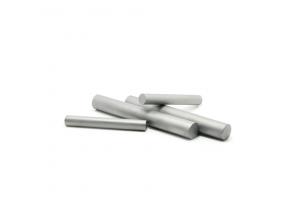
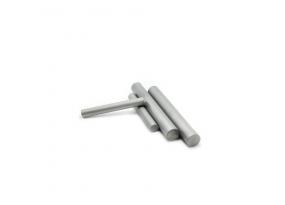
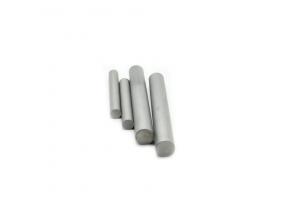
Carbide Rods Products
All Categories
- Ground Solid Tungsten Carbide Rods
- Unground Solid Tungsten Carbide Rods
- Tungsten Carbide Rods Single Hole
- Tungsten Carbide Rods Double Holes
- Nonstandard Tungsten Carbide Rods
- Tungsten Carbide Bars And Strips
- Tungsten Carbide Plates
- Customized Tungsten Carbide Products
- Tungsten Carbide Burr Blank
- Tungsten Weight
- Tungsten carbide rods&Custom-made Carbide rods
- Cemented Carbide Plates & Non-Standard Custom-made Carbide Plates
- Cemented Carbide Strips & Non-Standard Custom-made Carbide Strips
- Cemented Carbide Die & Non-Standard Custom-made Carbide Die
Contact Us
HAO Carbide Co., LTD.
Catherine Tang
Tel: +86-731-22199705
Fax: +86-731-28260602
Mob: +86-13975383023
Email: Catherine@haocarbide.com
Web: www.hao-carbide.com
Address: Building 3, Power Valley Industrial Park, Zhuzhou City, Hunan Province, China