
Exploring Tungsten Alloy Rings: Small Size, Immense Power
1. The Composition of Tungsten Alloy Rings
As the name suggests, Tungsten (W) is the core element, typically comprising over 85% of the alloy. Tungsten’s legendary properties define the ring’s performance:
Ultra-High Melting Point: With a melting point of 3,422°C, these rings remain stable and undeformed in extreme heat, such as in industrial furnaces.
High Density: At 16.5~18.75 g/cm³, this high density provides exceptional stability in environments prone to vibration and impact.To optimize performance, we incorporate "auxiliary" metals like Nickel (Ni), Iron (Fe), Cobalt (Co), and Copper (Cu):
W-Ni-Fe (Ductility): Adding Nickel and Iron increases elongation (15-29%), transforming brittle tungsten into a more ductile material that can be machined into complex shapes for aerospace applications.
W-Ni-Cu (Non-Magnetic & Stability): The addition of Copper provides low thermal expansion and non-magnetic properties, ensuring dimensional stability and zero electromagnetic interference in sensitive environments.
2. Key Characteristics
I. Exceptional Hardness & Wear Resistance
In mechanical manufacturing, components often face constant friction. While ordinary materials wear down or deform, Tungsten Alloy Rings resist abrasion effortlessly. This durability extends the lifespan of machinery, reduces maintenance frequency, and lowers long-term operational costs.
II. High-Density Advantage
With a density more than double that of steel, these rings are the premier choice for counterweights and radiation shielding. They provide maximum mass in minimum volume—a critical requirement for aerospace and medical sectors.
III. Superior Thermal Stability
Combining a high melting point with a low coefficient of thermal expansion, these rings resist melting and warping. They maintain precise dimensions even during rapid temperature fluctuations, ensuring the reliability of high-precision assemblies.
IV. Excellent Corrosion Resistance
Tungsten Alloy exhibits remarkable chemical stability. It resists corrosion from high-concentration acids in chemical processing and withstands high-salinity seawater in marine environments, ensuring safety and longevity in harsh conditions.
3. Diverse Applications
Medical Industry
Tungsten alloy rings play a vital role in radiotherapy. In linear accelerators and gamma knives, they serve as collimators or shielding rings.
Collimators: Act as "navigators," guiding high-energy particle beams precisely to the tumor while sparing healthy tissue.
Shielding: Effectively blocks gamma-ray leakage, protecting both medical staff and patients.
Radiation Detection & Sensors
Due to their superior X-ray and Gamma-ray absorption capabilities, these rings are integrated into radiation sensors for medical imaging and nuclear monitoring, ensuring accurate dosage detection in complex environments.
Aerospace & Aviation
Balance & Counterweights: In propeller-driven aircraft, tungsten alloy weights balance the immense centrifugal forces of high-speed rotation, reducing vibration and ensuring flight safety.
Avionics Shielding: Their density and electromagnetic shielding properties protect sensitive electronic flight systems from external interference and physical shock during flight.
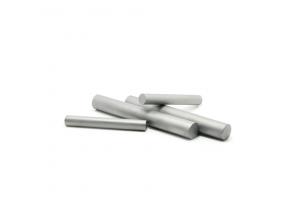
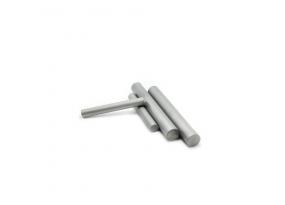
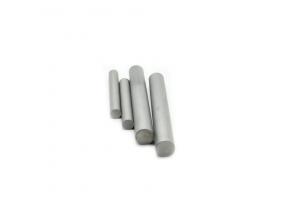
Carbide Rods Products
All Categories
- Ground Solid Tungsten Carbide Rods
- Unground Solid Tungsten Carbide Rods
- Tungsten Carbide Rods Single Hole
- Tungsten Carbide Rods Double Holes
- Nonstandard Tungsten Carbide Rods
- Tungsten Carbide Bars And Strips
- Tungsten Carbide Plates
- Customized Tungsten Carbide Products
- Tungsten Carbide Burr Blank
- Tungsten Weight
- Tungsten carbide rods&Custom-made Carbide rods
- Cemented Carbide Plates & Non-Standard Custom-made Carbide Plates
- Cemented Carbide Strips & Non-Standard Custom-made Carbide Strips
- Cemented Carbide Die & Non-Standard Custom-made Carbide Die
Contact Us
HAO Carbide Co., LTD.
Catherine Tang
Tel: +86-731-22199705
Fax: +86-731-28260602
Mob: +86-13975383023
Email: Catherine@haocarbide.com
Web: www.hao-carbide.com
Address: Building 3, Power Valley Industrial Park, Zhuzhou City, Hunan Province, China