
Exploring Cemented Carbide Nozzles: The Wear-Resistant Pioneer in Modern Industry
In the vast ecosystem of modern industrial manufacturing, countless components operate in seamless synchronization. Among them, the nozzle plays a decisive role. As a distinguished member of the nozzle family, the cemented carbide nozzle (also widely known as the tungsten carbide nozzle) stands out across numerous demanding applications thanks to its exceptional material properties and superior durability.

1. The Science Behind Cemented Carbide: The Secret to Extreme Durability
To truly understand the excellence of carbide nozzles, one must first look at their foundational material: cemented carbide. Produced via advanced powder metallurgy, this composite material combines hard refractory metal compounds with a metallic binder.
- Ultra-Hard Matrix: The backbone of cemented carbide consists of hard transition-metal compounds, primarily Tungsten Carbide (WC) and Titanium Carbide (TiC) powders. Tungsten carbide exhibits a hardness approaching that of diamond, serving as the core foundation for extreme abrasion resistance.
- Ductile Metallic Binder: The hard particles are bonded together using a metal binder, predominantly Cobalt (Co) powder. Cobalt acts as a high-strength industrial glue, creating a dense, unified structure that delivers an optimal balance between high hardness and mechanical toughness.
- Exceptional Thermal Stability: Cemented carbide retains its mechanical strength and hardness even at elevated temperatures. In extreme environments such as thermal spraying and metallurgical casting, carbide nozzles can operate reliably at 1000 C (1832 F) and beyond without structural softening.
-

2. Unrivaled Industrial Performance
Engineered from these advanced metallurgical properties, cemented carbide nozzles deliver distinct advantages across diverse operating conditions:
A. Extreme Wear Resistance in Abrasive Environments
Many industrial processes operate under aggressively abrasive conditions:
- Sandblasting and Surface Preparation: High-velocity abrasive particles collide with the nozzle interior, causing rapid material loss.
- Mining and Bulk Handling: Dust-suppression spray nozzles face continuous erosion from high-speed slurry and airborne dust particulates.
Cemented carbide nozzles offer a service lifespan several to dozens of times longer than standard steel or ceramic nozzles. This reduces replacement frequency, cuts downtime, and lowers long-term maintenance costs.
B. Robust Chemical and Corrosion Resistance
In chemical processing, marine engineering, and oil and gas operations, nozzles frequently contact aggressive chemicals, including acids, alkalis, salts, and seawater.
Carbide nozzles effectively prevent corrosion damage because:
- Hard compounds like tungsten carbide possess high chemical inertness and do not readily react with corrosive media.
- The continuous binder phase prevents corrosive penetration into the core structure, ensuring extended service life in hostile environments.
C. High-Precision Flow and Spray Stability
In high-precision applications - such as photoresist coating in semiconductor manufacturing, spray drying of food additives, and automotive surface coatings - nozzle accuracy directly impacts the final product quality.
Through precision mold pressing, vacuum sintering, and micro-grinding/polishing, the internal fluid channels and orifice dimensions of carbide nozzles are held to tight micron-level tolerances. This ensures exceptional spray pattern consistency and stable long-term operation.

Conclusion
From heavy-duty surface preparation to sub-micron industrial coating, cemented carbide nozzles have proven to be the indispensable wear-resistant pioneers of modern manufacturing. They offer global enterprises a reliable, cost-effective solution to optimize efficiency and minimize downtime.

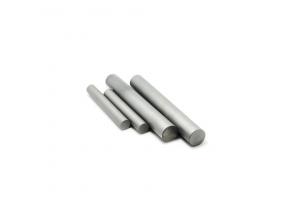
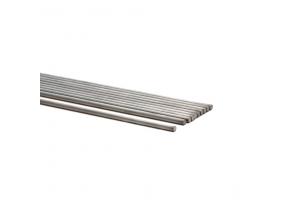
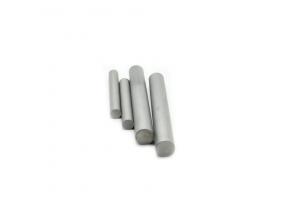
Carbide Rods Products
All Categories
- Ground Solid Tungsten Carbide Rods
- Unground Solid Tungsten Carbide Rods
- Tungsten Carbide Rods Single Hole
- Tungsten Carbide Rods Double Holes
- Nonstandard Tungsten Carbide Rods
- Tungsten Carbide Bars And Strips
- Tungsten Carbide Plates
- Customized Tungsten Carbide Products
- Tungsten Carbide Burr Blank
- Tungsten Weight
- Tungsten carbide rods&Custom-made Carbide rods
- Cemented Carbide Plates & Non-Standard Custom-made Carbide Plates
- Cemented Carbide Strips & Non-Standard Custom-made Carbide Strips
- Cemented Carbide Die & Non-Standard Custom-made Carbide Die
Contact Us
HAO Carbide Co., LTD.
Catherine Tang
Tel: +86-731-22199705
Fax: +86-731-28260602
Mob: +86-13975383023
Email: Catherine@haocarbide.com
Web: www.hao-carbide.com
Address: Building 3, Power Valley Industrial Park, Zhuzhou City, Hunan Province, China