
A Comprehensive Guide to Tungsten Copper Alloy Classifications
In materials science and industrial manufacturing, engineering materials are rarely categorized by a single parameter. Take stainless steel, for example: it can be classified by metallurgical structure, physical form (plates, pipes, bars), or functional application (architectural, chemical, food equipment). Viewing a material from different angles naturally reveals distinct classification frameworks.
The same principle applies to Tungsten Copper (W-Cu) alloys.
When engineers and procurement managers encounter designations like WCu50/50, WCu70/30, or WCu80/20, they typically think of classifications based on raw material ratios. However, chemical composition is only one part of the story. Tungsten-copper composites are also classified by their geometric form and end-use application.
At HAO CARBIDE, we integrate this multi-dimensional classification logic into our manufacturing process. Rather than relying solely on chemical ratios to define a product, we evaluate our clients' exact working conditions—combining chemical formulation, product geometry, and operational context to deliver fully customized material solutions and precision-machined components.
1. Classification by Chemical Composition (W-Cu Weight Ratio)
Classifying tungsten copper by the mass ratio (weight percentage) of tungsten to copper is the most widely recognized method in the industry.
Common standard compositions include:
-
WCu50/50 (50% Tungsten, 50% Copper)
-
WCu70/30 (70% Tungsten, 30% Copper)
-
WCu75/25 (75% Tungsten, 25% Copper)
-
WCu80/20 (80% Tungsten, 20% Copper)
-
WCu85/15 (85% Tungsten, 15% Copper)
-
WCu90/10 (90% Tungsten, 10% Copper)
How Ratio Dictates Performance:
Based on practical manufacturing experience at HAO CARBIDE, material properties shift along a predictable spectrum:
-
Higher Tungsten Content (e.g., WCu80/20 to WCu90/10): The material takes on the dominant characteristics of tungsten—exceptional hardness, high density, low thermal expansion (CTE), and superior resistance to electrical arc erosion.
-
Higher Copper Content (e.g., WCu50/50 to WCu70/30): The alloy exhibits enhanced thermal and electrical conductivity, improved machinability, and better ductile properties contributed by the continuous copper matrix.
Engineering Note: Chemical composition alone does not determine final performance. Factors like tungsten grain size, distribution uniformity, low porosity, and interfacial bonding between the tungsten skeleton and copper phase critically influence component integrity.
2. Classification by Product Form and Geometry
Beyond raw material ratios, tungsten copper alloys are categorized by their physical geometry, semi-finished stock form, or finished configuration:
-
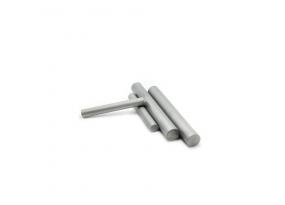
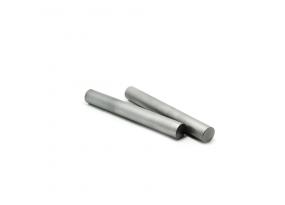
Round Bars & Rods: Widely used as stock for CNC turning, EDM electrodes, and plungers.
-
Plates, Sheets & Blocks: Standard stock for electrical contact manufacturing, heat sinks, and EDM tooling.
-
Tubes and Bushings: Suitable for hollow electrodes and rotational wear sleeves.
-
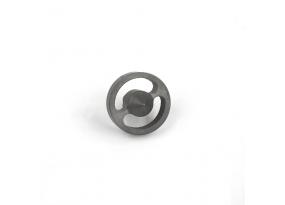
Rings and Discs: Common in rotating contact assemblies and seal rings.
-
Custom Precision Components: CNC-machined parts manufactured strictly according to customer 2D/3D engineering drawings.
Form Factor vs. Material Grade:
Geometric classification solves practical engineering challenges: assembly interfaces, load distribution, and machining efficiency. Shape and material ratio are independent variables:
-
A WCu70/30 alloy can be formed into a round rod, rolled into a plate, or wire-EDM cut into a complex perforated part.
-
Conversely, a standard round rod can be produced in WCu50/50, WCu70/30, or WCu80/20, depending on electrical wear vs. thermal conductivity requirements.
3. Classification by Industrial Application
Application-based classification focuses on the functional role the W-Cu component plays in demanding operating environments:
-
Electrical Discharge Machining (EDM) Electrodes (e.g., WCu70/30, WCu75/25): Delivers minimal corner wear and high material removal rates when machining difficult materials like cemented carbide.
-
High-Voltage Electrical Contacts & Arc Chutes (e.g., WCu70/30, WCu80/20): Used in circuit breakers and vacuum interrupters, resisting severe arc erosion and contact welding under high voltage.
-
Electronic Packaging & Thermal Management (e.g., WCu85/15, WCu90/10): Combines high thermal dissipation with a low Coefficient of Thermal Expansion (CTE) matched to semiconductor chips and ceramic substrates.
-
Resistance Welding Electrodes (e.g., WCu75/25, WCu80/20): Utilized for spot welding, projection welding, and welding conductive materials like copper and battery tabs.
Partner with HAO CARBIDE for Tailored W-Cu Solutions
Success in critical industrial applications relies on balancing all three criteria: selecting the right W-Cu formulation, optimizing the geometric manufacturing route, and engineering for the specific application stress.
HAO CARBIDE specializes in high-density tungsten copper composite production and precision CNC machining. Whether you require standard plate/bar stock or tailor-made, drawing-based finished components, our technical team provides the material expertise and manufacturing precision required for your critical applications.
Carbide Rods Products
All Categories
- Ground Solid Tungsten Carbide Rods
- Unground Solid Tungsten Carbide Rods
- Tungsten Carbide Rods Single Hole
- Tungsten Carbide Rods Double Holes
- Nonstandard Tungsten Carbide Rods
- Tungsten Carbide Bars And Strips
- Tungsten Carbide Plates
- Customized Tungsten Carbide Products
- Tungsten Carbide Burr Blank
- Tungsten Weight
- Tungsten carbide rods&Custom-made Carbide rods
- Cemented Carbide Plates & Non-Standard Custom-made Carbide Plates
- Cemented Carbide Strips & Non-Standard Custom-made Carbide Strips
- Cemented Carbide Die & Non-Standard Custom-made Carbide Die
Contact Us
HAO Carbide Co., LTD.
Catherine Tang
Tel: +86-731-22199705
Fax: +86-731-28260602
Mob: +86-13975383023
Email: Catherine@haocarbide.com
Web: www.hao-carbide.com
Address: Building 3, Power Valley Industrial Park, Zhuzhou City, Hunan Province, China