
What Factors Are Influencing Recent Tungsten Prices?
I. Analysis of Bullish Factors for Tungsten Prices
Recovery of Holder Sentiment
After a rapid and significant decline, the pressure to take profits has eased, and the mentality of holding back sales to support the market has strengthened, making the bottom support relatively firm. Furthermore, the profits made by upstream resource providers in the early stages have provided sufficient financial support for their inventory holdings.
Seasonal Supply Contraction
The main tungsten mining areas in southern China are concentrated in the Nanling metallogenic belt, which has a subtropical climate. From June to August, the region enters a hot and rainy season, with high risks of typhoons, flash floods, and debris flows. These natural disasters create seasonal and uncertain constraints on mining, beneficiation, and transportation, thereby affecting optimistic expectations for market supply.
Strengthened Compliance Supervision
China continues to strengthen its compliance supervision of mining and trading activities. Two major mine safety accidents in May are expected to prompt relevant departments to further strengthen safety supervision, leading to increased costs for compliant mine production and a slower pace of capacity release. Furthermore, the "Implementation Regulations of the Mineral Resources Law," which will take effect in June, will create a more standardized industry regulatory environment, inevitably increasing administrative costs for mining companies to some extent.
Cyclical Demand Release
Various demands suppressed and delayed by the rapid rise in tungsten product prices since 2026, as well as transactions suppressed by previous fear of high prices, are beginning to be released after raw material prices bottomed out and rebounded. Some downstream enterprises have entered the market to inquire and purchase, supplementing urgent demand and effectively diluting previously high-priced inventory costs. This has a positive feedback and boost to the prices of various tungsten products.
Expansion of High-End Applications
Tungsten plays an indispensable role in high-end equipment, electronic information, defense, medical and nuclear shielding industries. Related applications such as semiconductors, new energy, smart color-changing, and controlled nuclear fusion continue to grow. However, it should be noted that these related applications are unlikely to achieve large-scale incremental growth in the short to medium term. The long-term and large-scale potential still need market verification. Therefore, the risk of price fluctuations caused by speculative hype should be carefully considered.
Price Differential Between Domestic and International Markets
In recent years, the global consumption pattern for tungsten has featured sluggish international consumption alongside relatively strong growth in China. Although China’s prices were higher than international levels starting in Q3 2025, due to China’s regulatory policies, after domestic tungsten prices began a downward channel in the second half of March 2026, the situation reversed rapidly. International market prices are now significantly higher than domestic ones. There are currently structural differences in supply and demand between domestic and international tungsten markets, resulting in a substantial price gap. While this gap provides limited substantive upward momentum for the domestic market, it still constitutes a strong emotional support.
National Reserve Policy and Implementation
The Implementation Regulations of the Mineral Resources Law propose a strategic mineral resource reserve mechanism, but specific reserve scale, timing, and implementation details have not yet been clarified. Drawing on China’s historical experience with tungsten product reserves, HAOCARBIDE Online believes that China, with its absolute global advantage in natural tungsten resources, does not need to maintain high-level long-term stockpiles. Reserve actions are typically not launched on a large scale in a relatively high-price, normally functioning industry environment, unless there is a major non-market demand shock or extreme market slump. Currently, tungsten product prices remain in a historically high range with relatively normal operations; thus, this factor offers limited short-term psychological support to the market.
II. Analysis of Bearish Factors for Tungsten Prices
Limited Demand Potential
On the one hand, the rollercoaster market since 2025 has reduced the risk appetite of downstream enterprises such as cemented carbide and tungsten materials, leading to more conservative procurement strategies. Purchasing is now primarily driven by rigid demand, leaving limited room for proactive inventory buildup, and many companies face financial constraints. On the other hand, against the backdrop of a relatively stable macroeconomy, the market lacks significant incremental demand. Therefore, with foreseeable consumption potential coupled with cost pressures, the purchasing and sales sentiment of upstream and downstream enterprises in the industry chain is suppressed, and their acceptance of raw material prices is also limited.
Emerging Substitution Risks
Tungsten raw material costs have fluctuated sharply and still show more than a 2-fold increase compared to early last year. This has prompted some downstream cemented carbide industries to accelerate the search for alternative materials or technological transformation. Materials such as high-performance steels, superhard materials, cermets, graphene, and carbon-based materials are gaining penetration in traditional cemented carbide applications, which may weaken tungsten consumption intensity in the medium to long term. Additionally, advances and breakthroughs in the research and development of substitute materials for key end-use applications could potentially impact tungsten demand. Just as tungsten wire replaced high-carbon steel wire in the photovoltaic silicon wafer cutting field in recent years, a revolutionary change in the photovoltaic industry would directly affect the industrial consumption of tungsten wire in this sector.
Increasing Diversified Supply
Tungsten resource projects both domestically and internationally continue to advance. Examples include the on-schedule development of the Dahutang tungsten mine in Jiangxi, the rapid capacity ramp-up of the Bakuta tungsten mine in Kazakhstan, the revival of the Sangdong tungsten mine in South Korea, and partial resource supply from the Dolphin mine in Australia. HAOCARBIDE Online has recently received numerous inquiries regarding new tungsten mining projects and resources from Africa and Central Asia, signaling that more tungsten resources will continue entering the market. Meanwhile, high prices have created profit margins that have spurred the development of small-scale overseas artisanal mining and secondary resources, including tungsten tailings, tungsten-containing spent catalysts, and recycling of scrap tungsten alloys and materials. The continuous improvement in domestic secondary resource recovery levels will also ease rigid dependence on primary ores to some extent. More notably, the key minerals alliance formed by Western countries (such as Europe, America, Japan, Australia) and their increasing investments, along with the rising global trend of “resource democracy,” will bring significant uncertainties and potential risks to China’s tungsten industry in the future.
III. Analysis of Uncertain Factors for Tungsten Prices
Geopolitical Conflicts
As a critical strategic mineral, high-intensity geopolitical conflicts may significantly affect the direction and volume of international tungsten trade flows, supply chain security, and strategic premiums.
Changes in International Trade Relations
Policy games among China, the US, Europe, and others in the critical minerals field—including export controls, tariff adjustments, domestic supply chain restructuring, and critical minerals supply chain alliances—may alter the global tungsten trade landscape and introduce variables into China’s export and pricing mechanisms.
Other Macro and Financial Variables
Fluctuations in the RMB exchange rate, changes in global liquidity, and potential impacts from financial derivatives may also amplify short-term volatility in tungsten prices.
IV. Latest Tungsten Product Prices
65% wolframite concentrate: RMB 450,000/ton, a 57.1% decrease from its peak and a 2.2% drop from the beginning of the year.
65% scheelite concentrate: RMB 449,000/ton, down 57.2% from its peak and down 2.2% in 2026.
Ammonium paratungstate (APT): RMB 730,000/ton, down 52.0% from its peak but up 9.0% in 2026.
European APT: USD 2,900-3,180/mtu (equivalent to RMB 1.736-1.903 million/ton), down 3.2% from its peak but up 230.4% in 2026.
Tungsten powder: RMB 1,150/kg, down 52.1% from its peak but up 6.5% in 2026.
Tungsten carbide powder: RMB 1,100/kg, down 53.0% from its peak but up 5.8% in 2026.
Cobalt powder: RMB 560/kg, down 3.5% from its high but up 7.7% in 2026.
70% ferrotungsten: RMB 740,000/ton, down 47.9% from its peak but up 13.9% in 2026.
European ferrotungsten: USD 210-250/kg W (equivalent to RMB 994,000-1,184,000/ton), down 29.2% from its peak but up 67.3% in 2026.
Scrap tungsten carbide rod: RMB 730/kg, down 46.7% from its peak but up 21.7% in 2026.
Scrap tungsten carbide drill bit: RMB 680/kg, down 50.4% from its peak but up 17.2% in 2026.
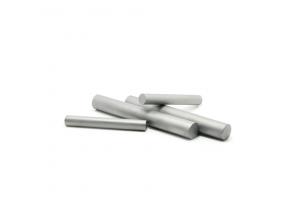
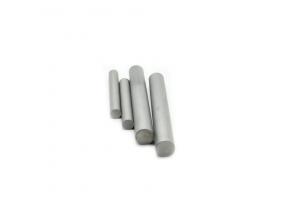
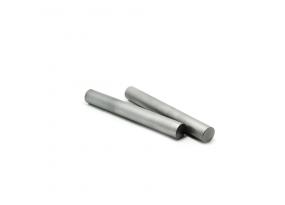
Carbide Rods Products
All Categories
- Ground Solid Tungsten Carbide Rods
- Unground Solid Tungsten Carbide Rods
- Tungsten Carbide Rods Single Hole
- Tungsten Carbide Rods Double Holes
- Nonstandard Tungsten Carbide Rods
- Tungsten Carbide Bars And Strips
- Tungsten Carbide Plates
- Customized Tungsten Carbide Products
- Tungsten Carbide Burr Blank
- Tungsten Weight
- Tungsten carbide rods&Custom-made Carbide rods
- Cemented Carbide Plates & Non-Standard Custom-made Carbide Plates
- Cemented Carbide Strips & Non-Standard Custom-made Carbide Strips
- Cemented Carbide Die & Non-Standard Custom-made Carbide Die
Contact Us
HAO Carbide Co., LTD.
Catherine Tang
Tel: +86-731-22199705
Fax: +86-731-28260602
Mob: +86-13975383023
Email: Catherine@haocarbide.com
Web: www.hao-carbide.com
Address: Building 3, Power Valley Industrial Park, Zhuzhou City, Hunan Province, China