What is a Tungsten Copper Electrode?
I. Understanding Tungsten Copper Electrodes
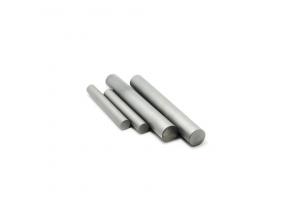
A Tungsten Copper Electrode (W-Cu) is a composite electrode material primarily composed of Tungsten (W) and Copper (Cu). It is widely used in fields such as resistance welding, Electrical Discharge Machining (EDM), high-voltage discharge tube electrodes, and more.
It is not a simple melt-mixture of tungsten and copper. Instead, it is usually produced via a copper infiltration process, which can be compared to a reinforced concrete structure: first, tungsten powder is sintered to form a porous skeleton (similar to a steel frame); then, liquid copper is infiltrated into the pores. After cooling, a composite material with a stable structure and high performance is obtained.
Based on 30 years of production experience, HAO CARBIDE summarizes the microscopic characteristics of high-quality tungsten copper electrodes as: uniform tungsten phase distribution, fully filled copper phase, and a clean interface with few defects. Electrodes with this structure fully combine tungsten's high melting point, high hardness, and heat/wear resistance with copper's excellent electrical conductivity, thermal conductivity, and ductility.
Generally, standard tungsten copper electrodes struggle to meet the needs of irregular structures, special material ratios, specific equipment conditions, and complex environments. Therefore, HAO CARBIDE is committed to providing professional non-standard tungsten copper electrode customization services, achieving flexible customization in terms of composition, shape, and size to meet individual industrial requirements.
II. Performance Characteristics
The physical and chemical performance indicators of HAO CARBIDE tungsten copper electrodes are not static; they change regularly according to the tungsten-to-copper ratio. Within a specific range, more tungsten results in higher hardness, better high-temperature resistance, and stronger arc erosion resistance; more copper results in better electrical and thermal conductivity.
|
HAO CARBIDE(Technical Specifications) |
||
|
Property |
Parameters |
Description |
|
Density |
12.5 ~ 17.0 g/cm³ |
Increases with higher tungsten content. |
|
Melting Point |
W: ~3422°C; Cu: ~1085°C |
Significant difference in thermal physical properties. |
|
Electrical Conductivity |
25 ~ 55% IACS |
Conductivity is primarily provided by the copper phase. |
|
Thermal Conductivity |
180 ~ 330 W/(m·K) |
Copper phase facilitates rapid heat transfer. |
|
Hardness |
150 ~ 300 HB |
Influenced by tungsten content and microstructure. |
|
Tensile Strength |
500 ~ 900 MPa |
Related to composition ratio, density, and bonding. |
|
Coeff. of Thermal Expansion |
6 ~ 10×10⁻⁶/K (20~800°C) |
Significantly lower than pure copper. |
|
Recrystallization Temp. |
W > 1200°C (Standard) |
High-temperature structural stability via tungsten. |
|
High-Temp Stability |
Maintains excellent stability |
Tungsten provides primary heat resistance. |
|
Arc Erosion Resistance |
Lower wear than pure copper |
Tungsten provides superior arc erosion resistance. |
|
Wear Resistance |
Increases with tungsten content |
High hardness of tungsten ensures durability. |
III. Factors Affecting Performance
The conductivity, thermal conductivity, wear resistance, heat resistance, and processing performance of HAO CARBIDE tungsten copper electrodes are influenced by material composition, microstructure, and manufacturing processes. For customized non-standard electrodes, specific dimensions, shapes, and usage conditions must also be considered.
|
Factors Affecting Performance |
||
|
Factor |
Details |
Impact on Performance |
|
W-Cu Ratio |
Mass fraction of W and Cu |
Affects density, hardness, electrical & thermal conductivity. |
|
W Particle Size |
Particle size and distribution |
Influences microstructural uniformity, density, and machinability. |
|
W Phase Distribution |
Uniformity and connectivity of W particles |
Affects wear resistance, heat resistance, and dimensional stability. |
|
Cu Phase Distribution |
Filling state of Cu between W particles |
Affects conductivity, thermal transfer, and material density. |
|
Material Density |
Internal pores and defects |
Impacts electrical, thermal, and mechanical properties. |
|
Surface State |
Roughness, machining defects, etc. |
Affects contact state and operational stability. |
|
Electrode Shape |
Cylindrical, square, stepped, irregular |
Affects contact area, current, and heat distribution. |
|
Sintering Process |
Temperature, time, and atmosphere |
Influences microstructure and densification level. |
|
Infiltration Process |
Molten Cu infiltrating W skeleton |
Affects Cu phase distribution and pore filling efficiency. |
|
Machining Precision |
Dimensions, tolerance, roughness |
Affects electrode assembly and actual processing results. |
|
Working Current |
Current level during operation |
Influences heat generation and electrode wear. |
|
Working Temp. |
Temperature during actual operation |
Affects thermal stability and service life. |
|
Processing Specs |
Discharge current, pulse width, etc. |
Affects electrode wear and processing efficiency. |
|
Cooling Conditions |
Cooling medium and dissipation method |
Influences operating temperature and heat transfer. |
|
Workpiece Material |
Material being processed or welded |
Affects electrode wear, sticking, and machining results. |

IV. How to Choose: Tungsten Copper, Red Copper, Molybdenum Copper, or Graphite?
Tungsten copper, red copper, molybdenum copper, and graphite can all be used to make electrodes or electrical contact components, but their compositions and performances differ. When selecting a material, one must comprehensively consider conductivity, thermal conductivity, wear resistance, machining characteristics, operating temperature, and actual working conditions.
Choosing the Right Material: HAO CARBIDE Tungsten Copper vs. Other Electrode Materials (Red Copper, Mo-Cu, Graphite)
|
(Comparison of Electrode Materials) |
||||
|
Item |
W-Cu |
Pure Copper |
Mo-Cu |
Graphite |
|
Composition |
W + Cu Composite |
High Purity Copper |
Mo + Cu Composite |
Carbon Material |
|
Conductivity |
Good |
High |
Good |
Relatively Low |
|
Thermal Cond. |
Good |
High |
Good |
Moderate |
|
Hardness |
High |
Low |
High |
High but Brittle |
|
Wear Resistance |
Good |
Average |
Good |
Good |
|
Heat Resistance |
Good |
Relatively Low |
Good |
Good |
|
Electrode Wear |
Low |
Relatively High |
Low |
Usually Low |
|
Machinability |
Difficult |
Easy |
Difficult |
Easy (but chips easily) |
|
Thermal Exp. |
Low |
High |
Low |
Low |
|
Dim. Stability |
Good |
Average |
Good |
Good |
|
Applications |
EDM, Welding |
General Electrical |
Electrical Contact |
EDM, Mold Making |
V. Shapes of Tungsten Copper Electrodes
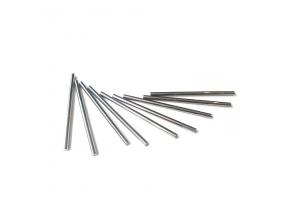
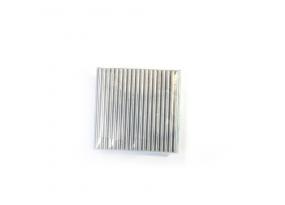
HAO CARBIDE produces tungsten copper electrodes in a wide variety of shapes, including cylinders, square columns, rectangular plates, stepped shapes, cones, discs, electrodes with holes, and slotted electrodes. We offer custom processing based on customer drawings or samples. Different shapes serve different performance needs and applications.
Custom Shapes and Design Specifications of HAO CARBIDE Tungsten Copper Electrodes:
|
(Shapes and Typical Applications) |
|||
|
Shape |
Structural Features |
Performance Features |
Typical Applications |
|
Cylindrical |
Circular cross-section |
Uniform current, good heat dissipation |
Welding, Electrical contacts |
|
Square |
Square cross-section |
Large contact area, easy positioning |
Resistance welding, contacts |
|
Rectangular |
Rectangular plate |
Large contact surface |
Resistance welding, EDM |
|
Stepped |
Multi-level dimensions |
Easy to position and assemble |
Precision electrodes, molds |
|
Conical |
Tapered/Pointed |
Focused current, high precision |
Precision welding/cutting |
|
Disc |
Circular disc shape |
Large contact, uniform heat |
Low-load electrical contacts |
|
U/V Shaped |
U or V profile |
Improved focus, larger contact |
Specific welding/cutting |
|
With Holes |
Through or blind holes |
Easy installation and positioning |
Resistance welding, EDM |
|
Slotted |
Surface grooves |
Meets special structural needs |
Resistance welding, EDM |
|
Irregular |
Custom per drawing |
Flexible structure |
Carbide Rods Products
HAO Carbide Co., LTD.
Catherine Tang
Address: Building 3, Power Valley Industrial Park, Zhuzhou City, Hunan Province, China
|